Piezoelectric Materials
Material selection, textured ceramics, PZT and PMN-PT systems, 1–3 composites, processing strategy, electromechanical characterization, and performance optimization.

Engineering Consultancy · Transducers · Sensors · Acoustic Systems
EPROD Technologies provides specialized engineering consulting, modeling, prototyping, testing, and low-volume manufacturing for custom ultrasonic transducers, piezoelectric sensors, phased arrays, and acoustic systems—with a path to scalable production when the design is ready.
What We Do
Engineering consulting, model-based design, prototype development, and low-volume manufacturing—from requirements definition and simulation through fabrication, calibration, validation, and production transition.
Material selection, textured ceramics, PZT and PMN-PT systems, 1–3 composites, processing strategy, electromechanical characterization, and performance optimization.
Custom single-element, broadband, phased-array, high-sensitivity, and high-power transducer design and manufacturing—including matching, backing, damping, wiring, packaging, integration, and calibration.
Projectors, hydrophones, vector sensors, sonar architectures, acoustic arrays, beamforming concepts, source and receive performance, and system-level trade studies.
COMSOL and MATLAB analysis for impedance, resonance, electromechanical coupling, acoustic radiation, beam patterns, steering, sensitivity, and design optimization.
Characterization plans, pulse-echo and pitch-catch testing, underwater calibration, impedance analysis, acoustic measurements, data reduction, and root-cause investigation.
Prototype and low-volume transducer manufacturing, supplier engagement, process definition, design-for-manufacture, quality controls, risk reduction, and production-readiness roadmaps.
Products
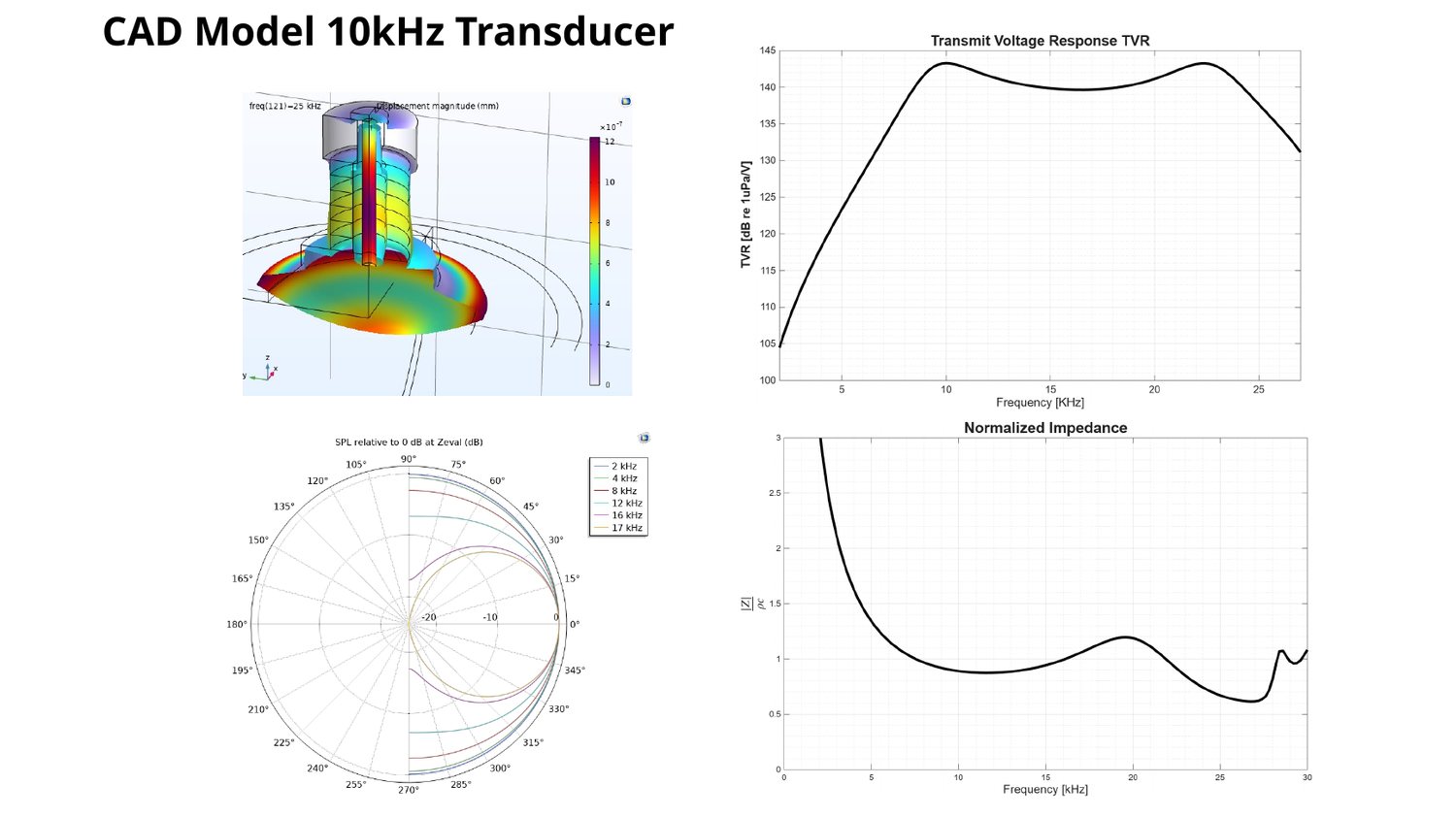
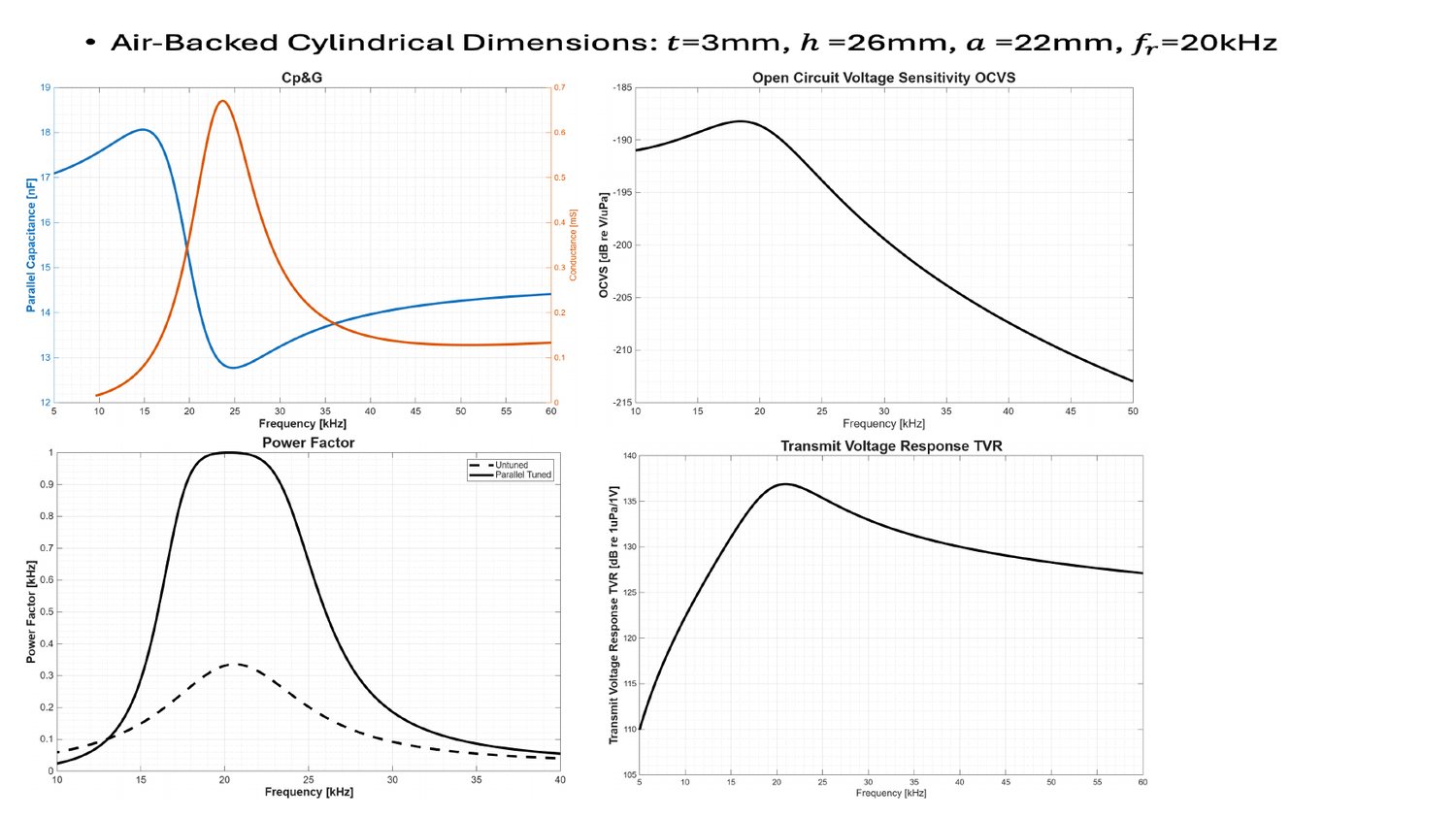
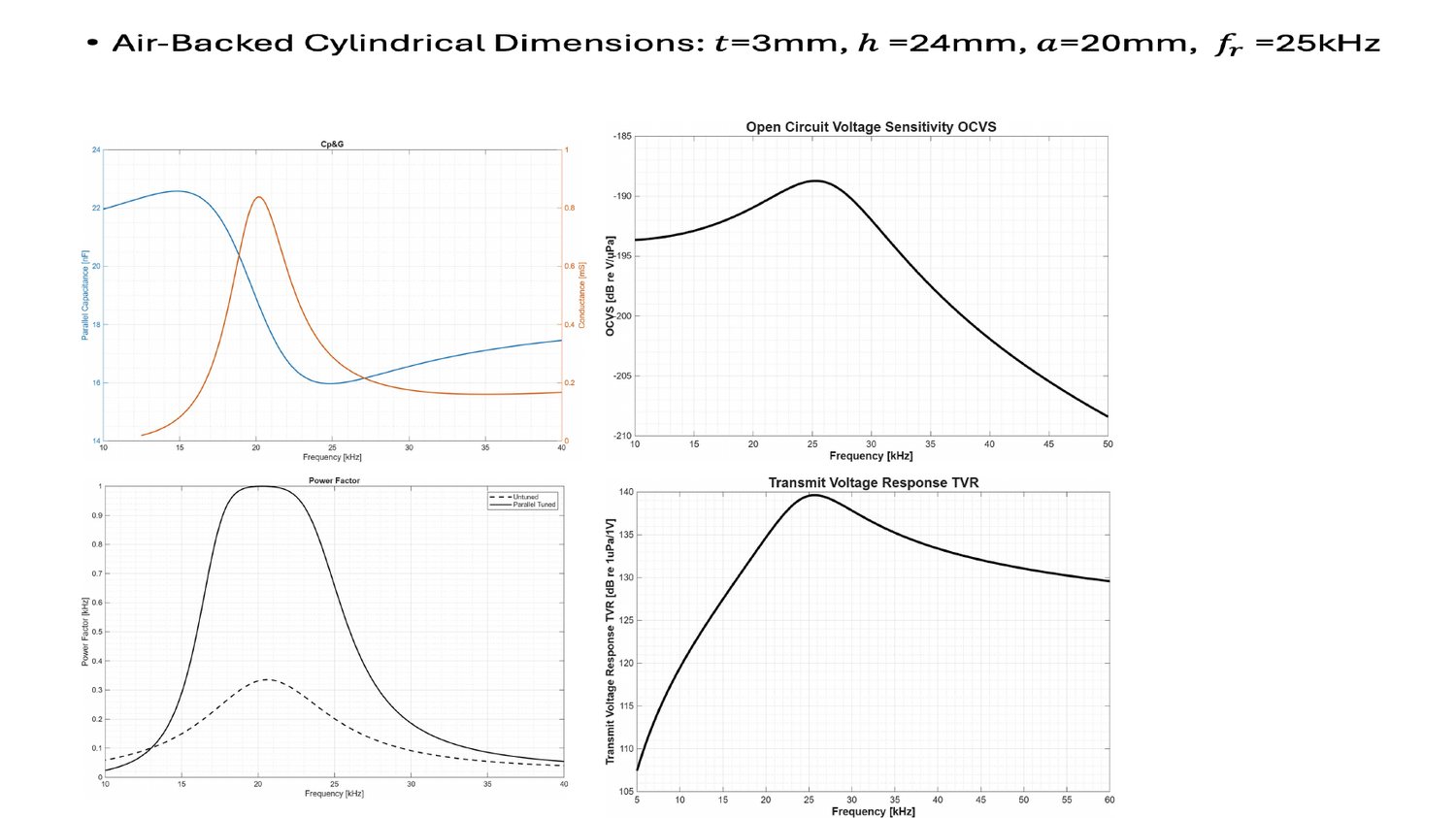
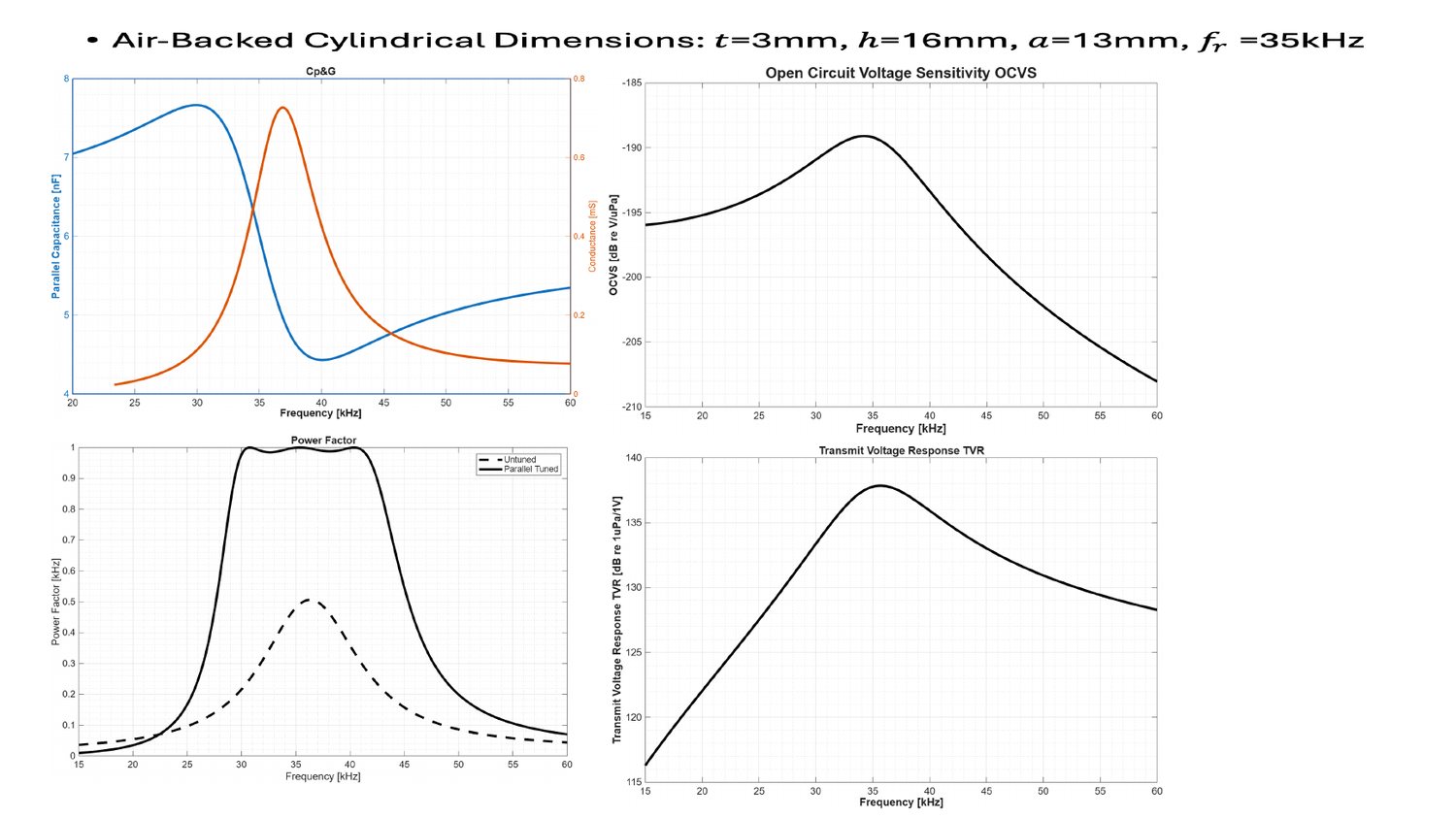
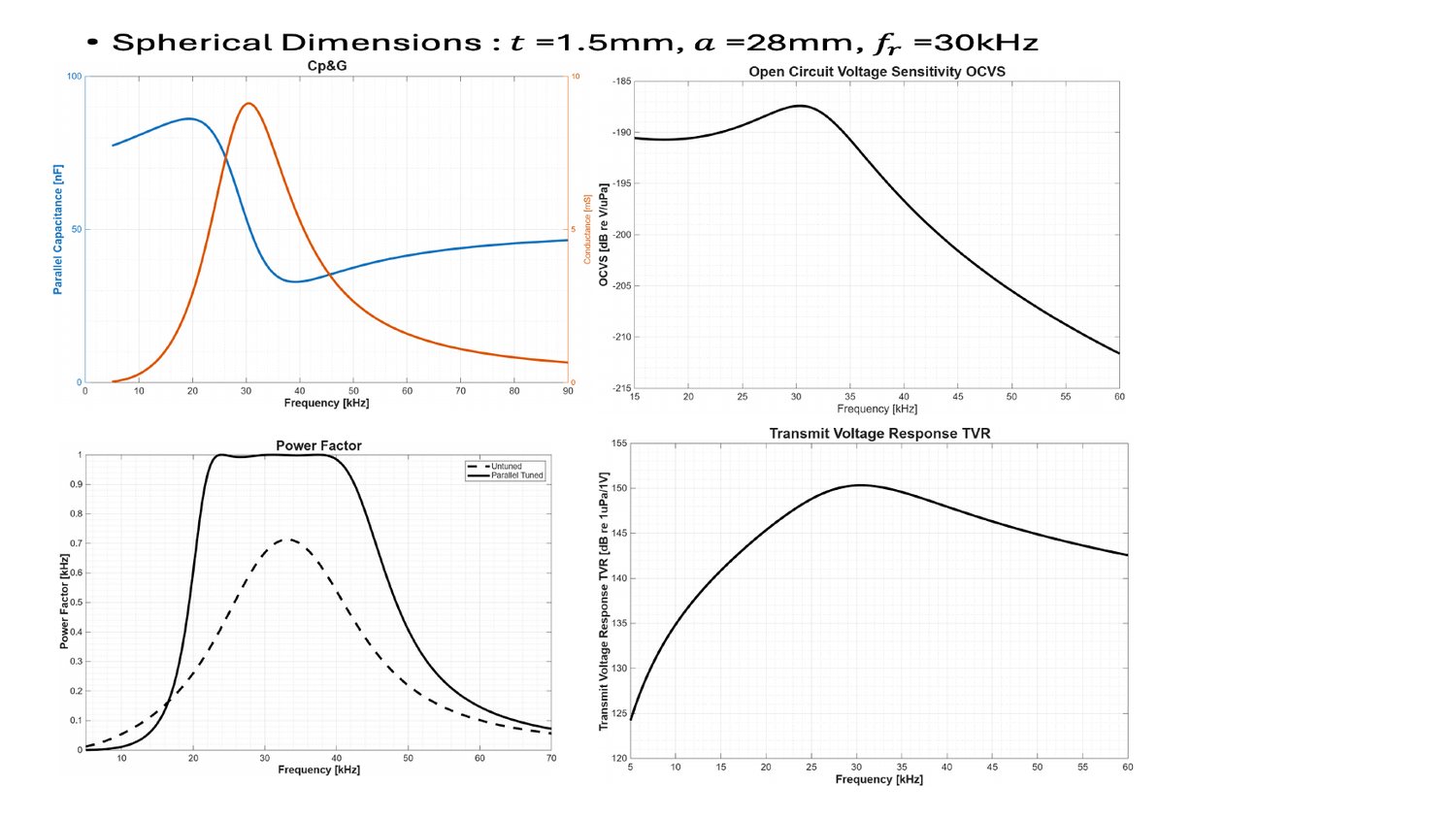
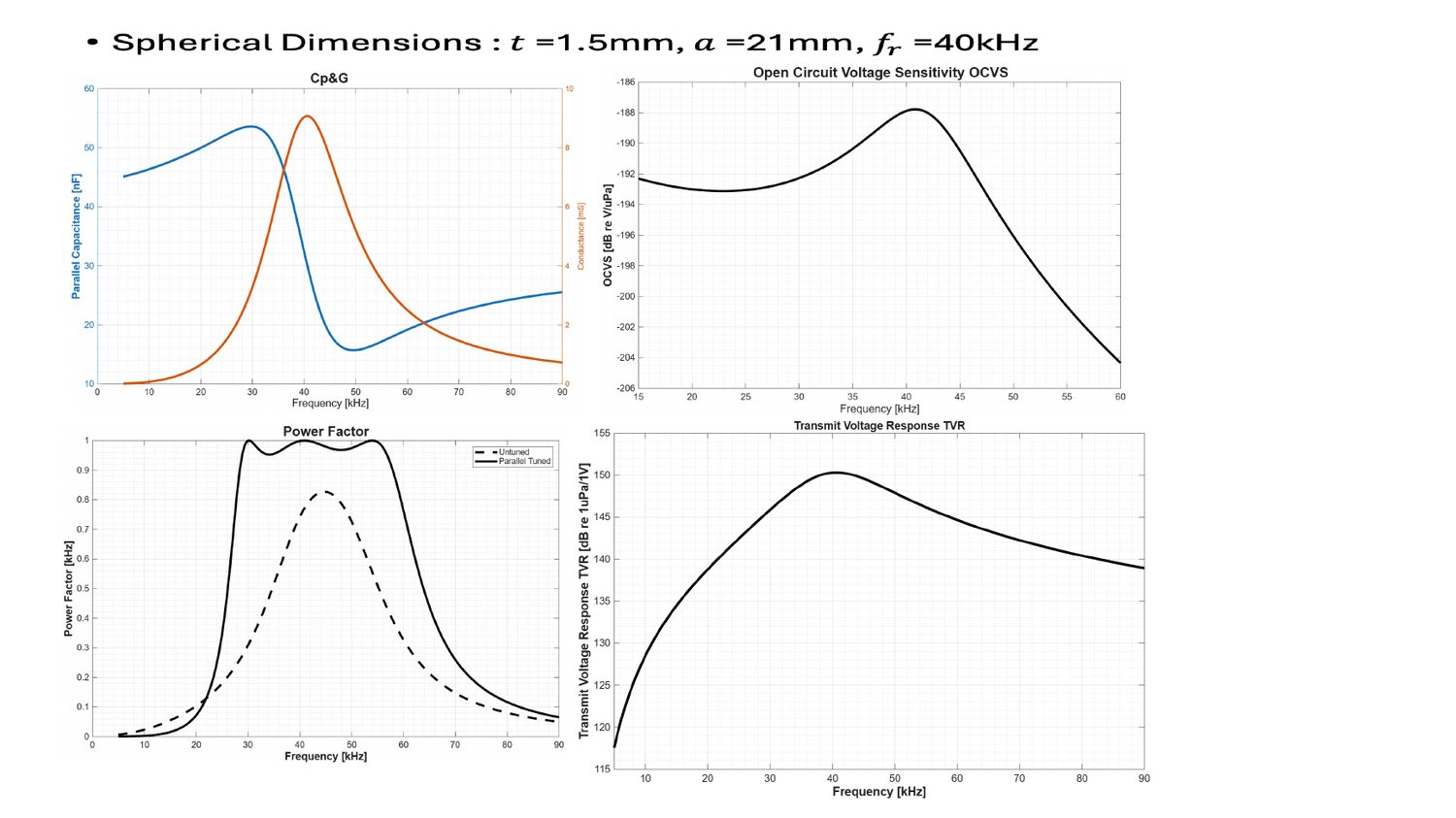
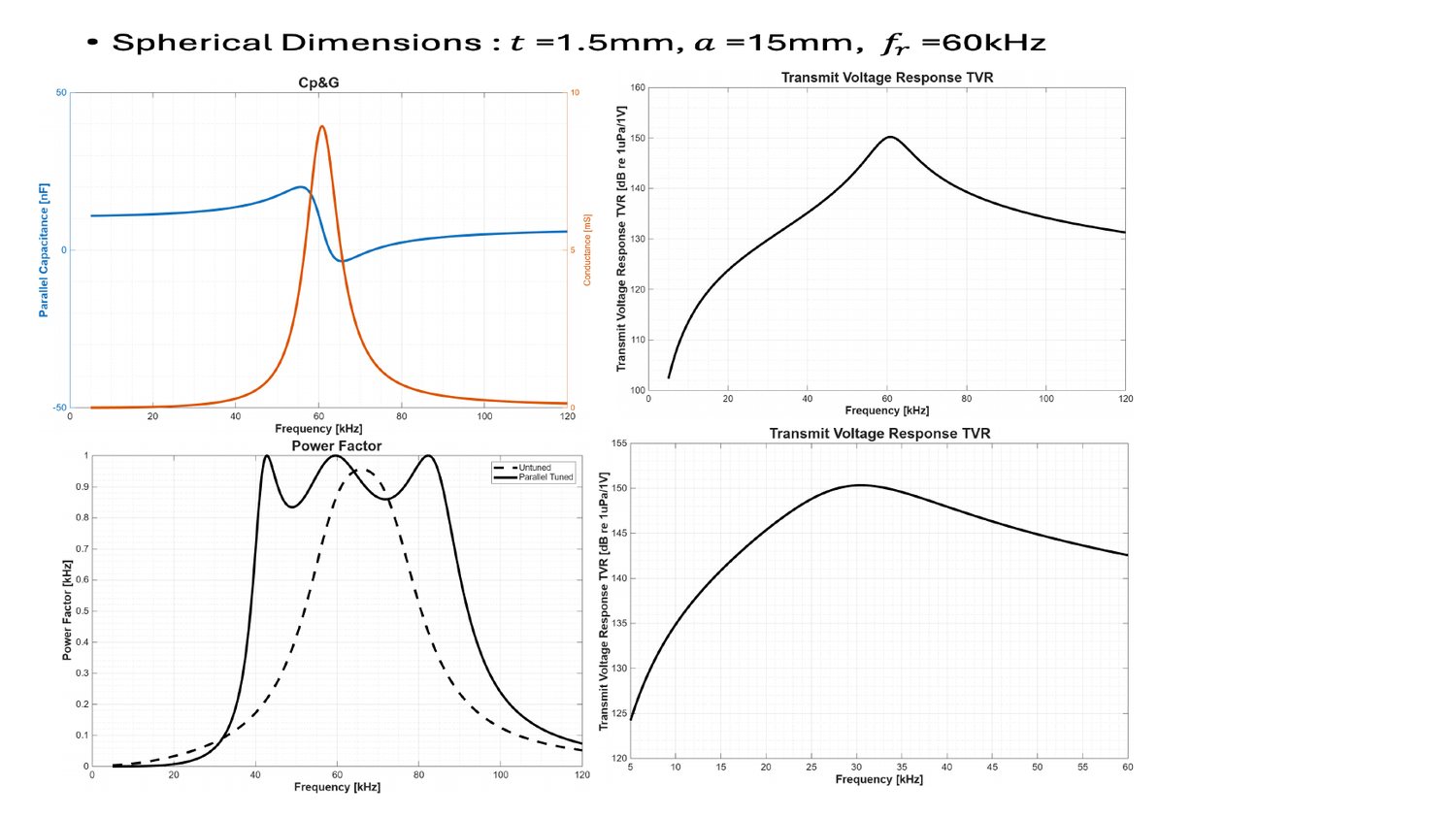
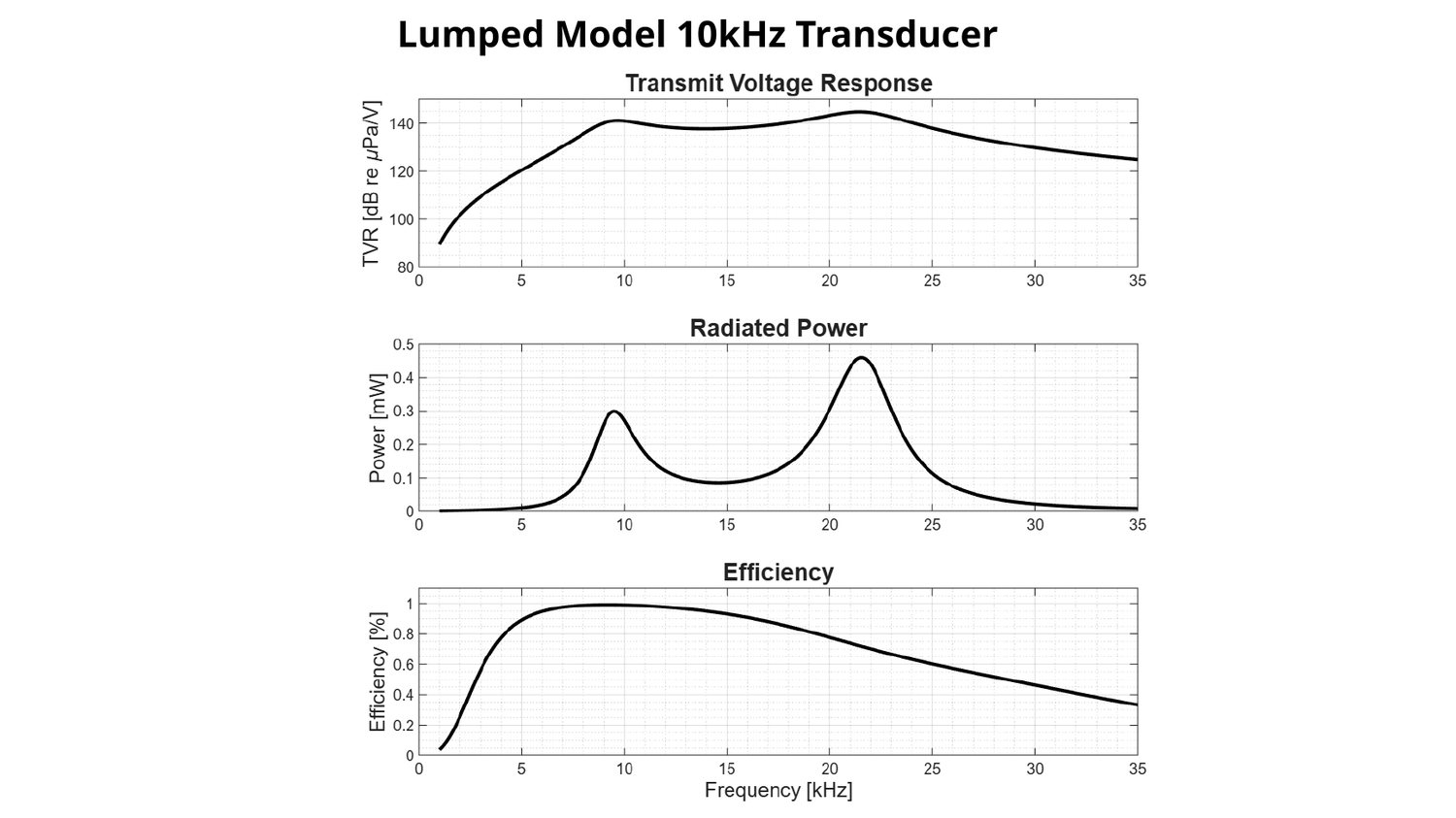
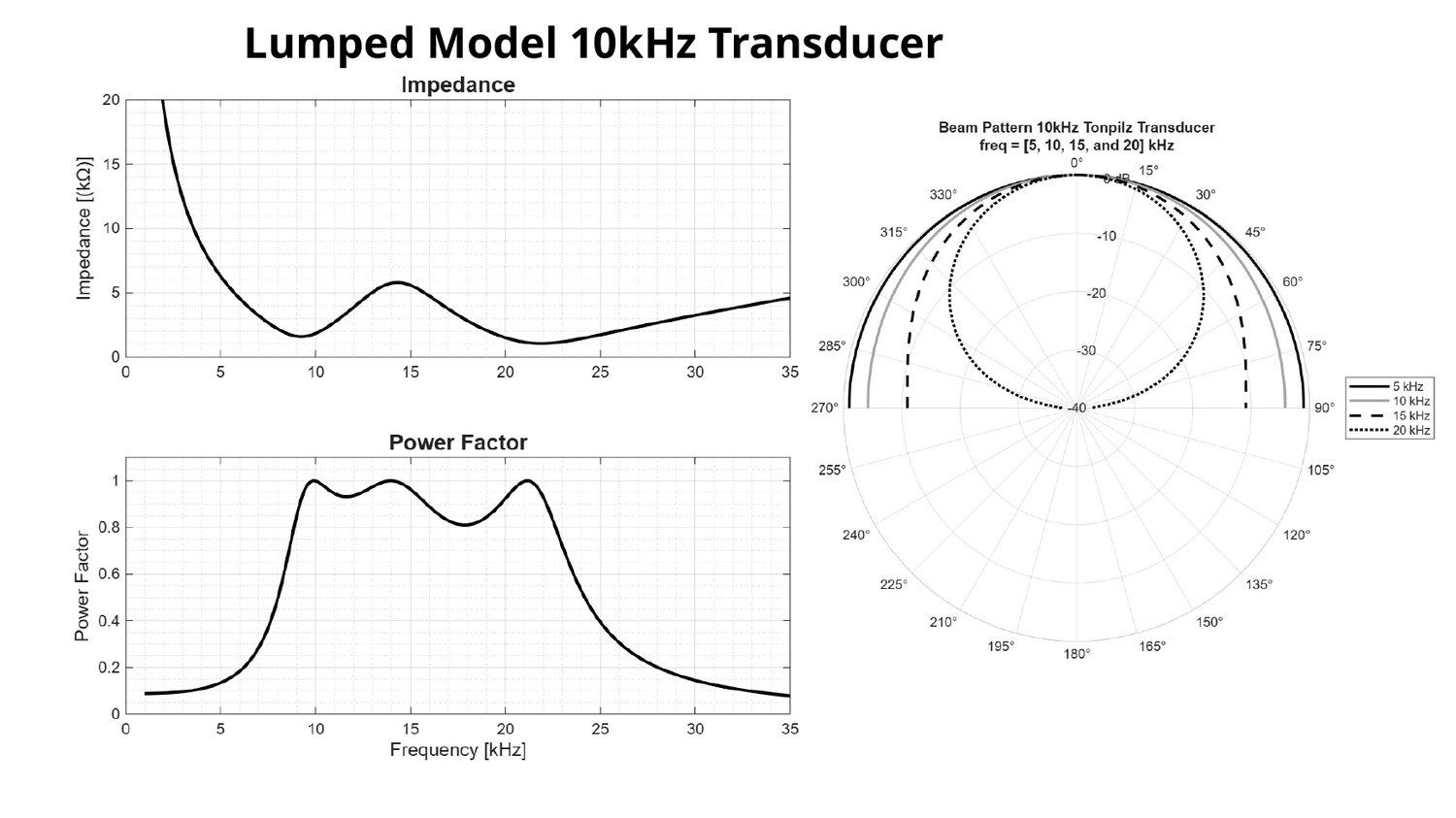
EPROD develops underwater acoustic transducer concepts using analytical, lumped-parameter, and multiphysics modeling before committing to hardware. The examples below show representative design studies and predicted performance for air-backed cylindrical and spherical configurations, including TVR, OCVS, capacitance/conductance, power factor, impedance, beam patterns, radiated power, and efficiency.
UNDERWATER ACOUSTIC TRANSDUCERS
Simulation is used to evaluate geometry, resonance, electrical behavior, acoustic output, and efficiency before prototype fabrication. This supports faster technical down-selection and gives clients a quantitative basis for design reviews and prototype decisions.
Simulation Results
Technical Depth
EPROD Technologies connects the disciplines that determine real sensor performance, avoiding isolated design decisions that create downstream risk.
Request a capability discussion →How We Work
Translate mission needs into measurable technical requirements, interfaces, constraints, and acceptance criteria.
Use analytical and multiphysics models to establish feasibility, identify dominant variables, and down-select concepts.
Create practical prototypes with materials, packaging, electrical interconnects, and assembly processes aligned to the use case.
Test against requirements, reconcile model-to-measurement differences, and isolate performance-limiting mechanisms.
Document the design and process, reduce supplier and manufacturing risk, and prepare the solution for repeatable production.
About EPROD
EPROD Technologies is an engineering consultancy focused on piezoelectric materials, ultrasonic sensing, underwater acoustics, and sonar systems. We support clients who need rigorous analysis, practical design execution, and clear technical leadership on high-consequence development programs.
Engagements are structured around the client’s need—independent technical review, focused troubleshooting, modeling support, prototype development, test strategy, supplier evaluation, or full development planning.
Start a Conversation
Describe the application, technical objective, current maturity, and primary constraint. EPROD Technologies will respond with a focused next-step recommendation.
Email: eprodtechnologies@gmail.com